Dhanishtha is ruled by Mars and covers the latter part of Capricorn and early portion of Aquarius. Both of these signs are under Saturn rule giving this Nakshatra a great deal of energy based on aggression, seriousness, and separateness.
Nonetheless, for the disciplined and patient person the power to gain abundance and fame lies here. Mars is exalted in Dhanishtha, granting the ability to act in the world. Persistence, discipline, and a strong work ethic are gained from the strong Saturn influence.
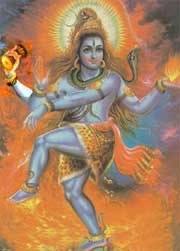
Dhanishtha’s symbol is the drum of Shiva, also called the drum of time, and learning the rhythm of the dharma allows one to prevail simply by wearing down resistance both internally and externally. Dhanishtha is paired with the eight Vasus, benefic forces of light and abundance. These are Sun, Moon, Earth, Sky, Space, Fire, Wind, and the Nakshatras. Understanding and harvesting Dhanishtha’s shakti brings all of the material world to one’s aid.
The shadow side of this power is greed, lust, selfishness, and anger. Great material wealth without spirit, gratitude, and generosity is as destructive as any force in all creation.
Being patient and responsible in one’s work, understanding that the fruits of labor belong to all and creation or the Creator will take care of us is how to remain in the benefic light.
Both sides of this asterism may be seen in personalities born under a Dhanishtha Moon: Marilyn Monroe, Timothy Leary, Woody Allen, Princess Diana, Orson Welles, and the poet Rainier Marie Rilke are among these.
Today, in my time zone, is divided almost equally between two Nakshatras. The first half belongs to Uttara Ashadha, ruled by the Sun. This is one of the most humanitarian Nakshatras, and anytime we find strength built on care of others, we find a connection to Dharma, the natural order of the universe, or what I refer to as the path of least resistance to ultimate freedom, eternal peace, and universal love.
Uttara Ashadha begins in Jupiter-ruled Sagittarius where it has the strength of the elephant. One symbol for this Nakshatra is an elephant’s tusk. Three-fourths of Uttara Ashadha is in patient, Saturn-ruled Capricorn, the seat of Divine wisdom overseen by the judge of karma, administrator of time, and teacher of dharma through difficulty.
Uttara Ashadha is associated with the sons of Dharma, called Vishadevis in Vedic terms. These ten are Abundance, Ancestors, Desire, Forbearance, Goodness, Joy, Ritual Skill, Time, Truth, and Will-Power. Combined and balanced, these form the apadhrisya shakti, the “unchallengeable victory.”
Idealism, goals for the betterment of all, devotion, persistence, universal love, kindness, loneliness, and melancholy all simultaneously exist in those born under this influence. The victory is won through patience and is so complete it endures long after the champion has passed on.
People with this influence include Abraham Lincoln, Robert Kennedy, John Lennon, Albert Schweitzer, Muhammad Ali, and Stephen Sondheim.
The second half of the day belongs to Saturn-ruled Shravana. It is associated with Vishnu, preserver of the Universe who helps humanity to see past the illusory and temporal quality of the material world to the underlying connectedness of all. This is the shakti of samhanana.
Shravana’s root is the Sanskrit sru, and refers to hearing the Divine Voice, the sounds of ethereal truth. The sacred Aum or Om in all its manifestations communicates the Word that began the vibrations resulting in the Big Bang. It is the sound we intone and listen for during deep meditation.
Hard work, patience, and most of all a thirst for learning on deeper and deeper levels throughout life accompany this influence. Shravana natives seek solitude, a place to escape the noise of the temporal world so they can hear the word of the Divine. They seek resources in life to free their time for study in the pursuit of ultimate freedom and unity with the source of creation.
My teacher, Dr. David Frawley has his Moon in this Nakshatra.
The darker nature of Shravana leads to hyper-sensitivity to criticism, real or imagined, issues with jealousy and resentment, creating perceived enemies and in certain combinations produces violence. Charles Manson also had a Shravana moon. This highlights the need for both solitude and socialization, and grounding in the principles of unity not enmity. When we hurt others we hurt ourselves as well.
The two Nakshatras that the Moon transits today make available much power for doing good to and for others, and consequently advancing our own lives. It is truly a matter of choosing unity and love over division and discord.
For getting going after the weekend, Purva Ashadha can be a helpmate or a hindrance. The key to using the Nakshatra’s shakti power to invigorate or energize is first to recognize that the asterism’s nickname, “the invincible star,” creates the potential for becoming a Quixotic Hero.
Used for right, this quality reveals latent and hidden abilities. Applied effort to grow and strengthen them in alignment with reality creates a golfer like Tiger Woods, a voice like James Earl Jones, or a novelist of the immortal talent of Ernest Hemingway. Used out of arrogance, selfishness, for personal gain, or under the illusion of invincibility extending to unearned and unworthy conquest and power results in an Adolf Hitler or Joseph Stalin.
All of these figures had their Ascendant, Sun, or Moon in Purva Ashadha.
The Nakshatra is ruled by Venus in Jupiter’s bold sign Sagittarius. Luxury, comfort, love, lust, truth, beauty, and fastidious discernment are all expanded when the two naturally benefic planets come together. But an errant Mars nature of aggression, or a narcissistic Sun or afflicted Moon may bring out arrogance, jealousy, possessiveness, and physical aggression.
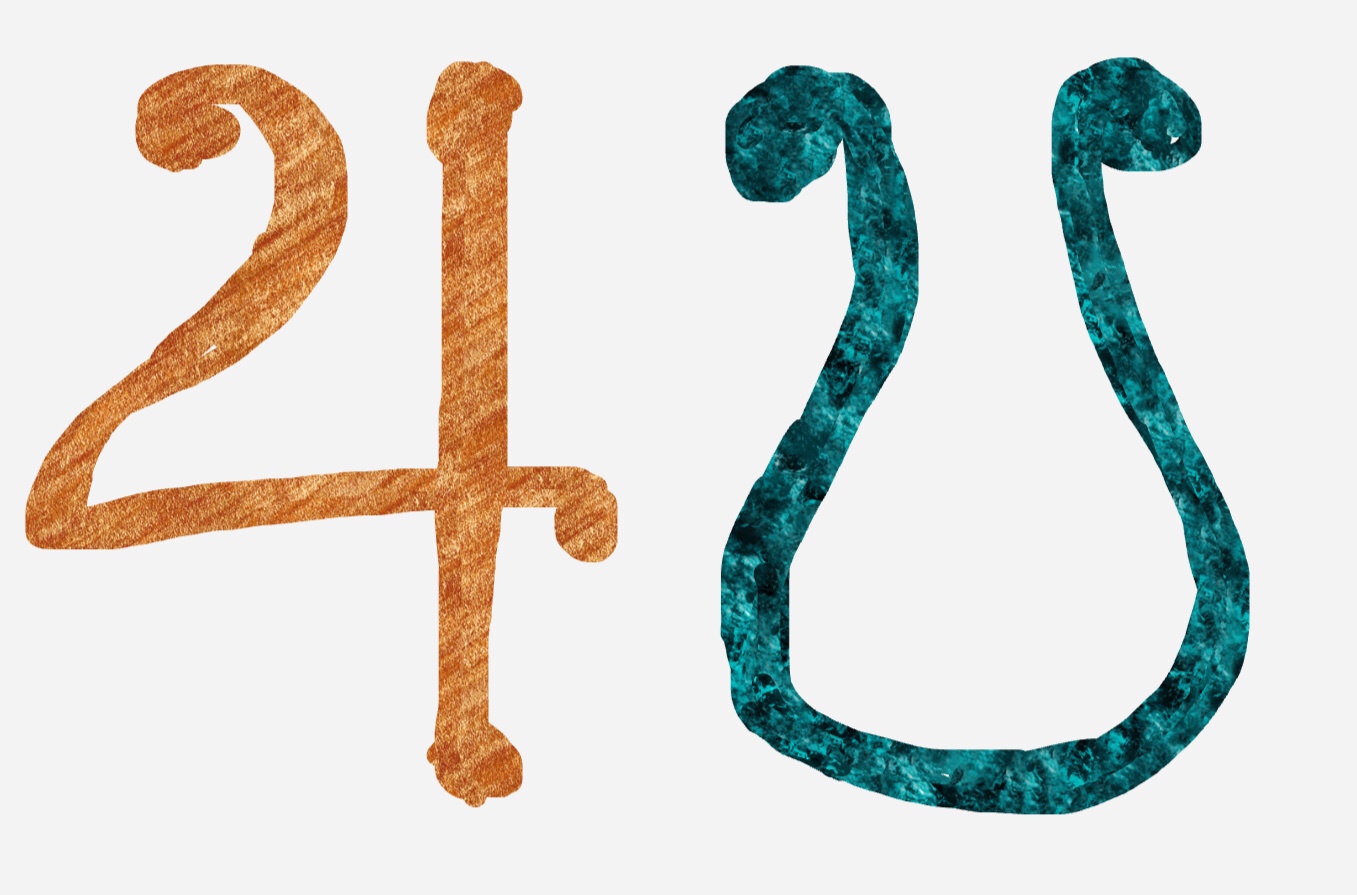
More than most Nakshatras, Purva Ashadha requires us to control our impulses, aspire to benefit all from our talents, and strive with discipline and diligence to constantly improve our nature and behavior. That’s a worthy and full Monday for any of us! The pursuit of Moksha, ultimate freedom, and the use of the symbol of the winnowing basket to sift the chaff from our lives in order to clear obstructions to becoming our best will bring about invincible strength in our group and individual endeavors.
As the Sun emerges from the Moon’s shadow and the Moon begins a new cycle in Mula this is a day for thinking about roots. Mula is the “origin” or “root star,” located in the first 13 degrees 20 minutes of Sagittarius. Ruled by Ketu and in an active Jupiter-ruled sign, Mula marks the beginning point of the transformation from material to spiritual form.
Jupiter grants expansion, abundance, and joy in all things, and in enthusiastic Sagittarius one often finds wealth-building activities. But these are offset by the quality of dissolution from Ketu, whose energy remains especially strong following an eclipse. And in Mula, one finds the power to disassemble, tear apart, and disperse all of the parts of an element or situation, and through this act of destruction, to find the root source of its existence.
The meditation practice of self-negation is often fruitful under Mula. It begins with “I am, but I am not. I am not my body. I am not my mind. I am not my home. I am not my family. I am not my consciousness.” By stripping away the illusions of fixed and permanent self-identity that are rooted in the world, one eventually gains awareness that one is thought and feeling within a greater consciousness that knows no boundaries. And even that may be stripped away to reveal the naked ground of all creation, the pure and perfect wholeness with the freedom to recreate space and time or simply to repose in perfect peace. Words don’t do justice to this meditation. Experiencing the dissolution that happens as one sits in stillness without regard for time softens the borders between the material and immaterial and this is a good time to begin such practices.
Because of the airy and fierce nature of Ketu and Mula, the mind overly attached to material pleasures is subject to addiction, as is the person trapped in the pose of the victim of external forces. The tragic life of Judy Garland reflected her Mula Moon. Finding success and fame at a young age, she struggled against addictions and a public image that wasn’t felt within. The stripping away of reason and dissolution of her body were a terrible tragedy that played out on stage and in the entertainment media.
Under any strong Ketu influence, a person is forced to confront the root source of being, and to release ideas of separateness in the form of selfish independence and material grounding. Ketu teaches us that what we see as the self (body, mind, job, image) is powerless against time and nature. The first of the 12-steps of Alcoholics Anonymous is very similar to what Ketu teaches. Interestingly, AA in the United Kingdom held its first meeting with both the Sun (self) and Venus (indulgence) in Mula.
Both Ashwini and Magha Nakshatras also have Ketu rulership. Magha was on the Ascendant when the first UK AA meeting convened.
The most significant lesson of Mula for me is that through pain and the taking apart of anything I am attached to, it reveals its root source and its connection to the eternal creative force and ultimately, the love both for what it cost in terms of sacrifice and what it is now free to become through unconditional love.
Jyeshtha, known as the chief or elder star, is located in the last half of Scorpio. Ruled by Mercury and in a Mars-ruled sign, Jyeshtha combines speed, intelligence, mischief, and impulsive action with aggression, assertion, strategic thinking, and martial authority. Placement of earthy Mercury and fiery Mars together in watery Scorpio creates the potential for creative action with broad effects over time and space.
It is a place of both attacking and defending, of rising above challenges, including perilous ones, and attaining a position of supremacy. Successful actions under Jyeshtha involve both cunning and courage, and if undertaken in a state of agitation or with malicious intention can undermine much previously good work.
This Nakshatra is associated with Indra, the great warrior god of ancient India who defeated a dragon by courage and cunning rather than skill at arms. The myth is reminiscent of the cunning of Odysseus the virtue of St. George. Subterfuge, courage, and intelligence bring about the ability to think and act differently for success in overcoming seemingly insurmountable obstacles here. Beethoven, Albert Einstein, Winston Churchill, and William Blake all had their natal sun or moon in Jyeshtha.
To be successful when cunning, aggressiveness, and courage are present requires attention to and control of the ego, arrogance, and base emotions such as greed, lust, and unchecked material desire. A deranged Jyeshtha mind may show great potential but is also harboring terrible darkness. This darkness may harm oneself or others, as in the cases of Ted Bundy, Jim Morrison, and Vincent Van Gogh who were ultimately destroyed through their connection with malign forces and ill-considered acts.
Today’s solar eclipse in Jyeshtha brings the darker nature to the surface, but that does not mean we are beholden to it. Rather, it reminds us that duality is part of life and that we must be alert to the spontaneous appearance of false or shadowed reality in order to penetrate, disburse, and be relieved of its negative effects. Once seen, our dharmic mission and karmic destiny combine to unite in opposition, not through strength of arms, but by the power of our collective consciousness.
Anuradha, the Star of Success, like all three Nakshatras partially or wholly within Scorpio, has a quality of judgment about it. Scorpio is a sign that seizes all energy around it, immediately classifying it in dualities of good or bad and stubbornly clinging to its first impression.
As we approach the New Moon and Solar Eclipse in Jyestha, conflict and confrontation resulting in impasse increases, and we may miss opportunities to turn inward and discard some of our outdated and destructive beliefs.
The power of Anuradha is that of worship, where even the tiniest spark of faith in something greater than ourselves can bring about large success. But first we must kindle that spark.
Anuradha’s motivation is Dharma, right action aligned with the laws of reality. It permits us to see deeply into the true nature of the universe if we will take the time to look. The universe is perceived as centered on each of us as individual pieces of temporary consciousness. This great illusion creates the senses that bring us information about the material world and from these sense perceptions our minds form the world of pleasure and pain. But a spark of belief in an energetic presence underlying these minds and bodies that will one day fail us allows one to conceive of our connections to all of creation.
Shattering the illusion of separation joins consciousness to unconsciousness, the seen to the unseen, and eventually leads to the realization of the completeness of everything. Resisting the oneness that we are part of brings only conflict in which the dualism that divides further separates us from true happiness.
Try to set aside pettiness and become a bit philosophical for a bit each day. Who you are, where you came from, and where you are going are not nearly as important as what you think, do, and say in the moment. It is our present that decides all the rest.
Unity, symmetry, stillness, like a perfect lotus flower enable us to live in peace.
Vishakha Nakshatra, ruled by Jupiter, and filling the transition between Libra and Scorpio occupies two signs that represent equality and judgement. These are elements of justice, and one way of looking at justice delivered is to “reap the fruit” of one’s actions.
Jupiter’s rulership, as the planet of abundance, expansion, and enjoyment gives a protective nature to those whose work aligns with dharma — natural laws that transcend and transform universal consciousness for good — and relates to manifesting positive outcomes in life through conscious effort. Enthusiastic optimism in the shaping and pursuit of our goals in life, especially through times of difficulty, allow us to persist and succeed.
One translation of the word Vishakha is “the branching or forked one.” Because we want to encourage the fruits of goodness to ripen in our lives, one is best served to see these branches as extending out to offer protection and shelter to ourselves and others. This often requires patience and an extra measure of determination. Vishakha tends to become more beneficial in the second half of life if we attend to creating positive, ambitious goals and work diligently toward them in our youth.
Those who embrace positivity in the face of obstructions, obstacles, and suffering exhibit a special brand of courage that is reminiscent of Vishakha’s deity, Indra, who in Vedic mythology defeated Vritya, the dragon demon of drought and thence became the god of rain and the thunderbolt, similar to Zeus or Odin.
The outward expression of energy from Vishakha left unchecked can bring out dictatorial, aggressive, and argumentative qualities in those who do not manage their passionate natures. Overambition, envy, and impatience may lead to isolation and resentment in such cases. Because the Moon is debilitated in the last 3 degrees and 20 minutes of Vishakha, betrayal, infidelity, and morally questionable acts may be produced in those who fail to learn the lessons of selfless love. However, given time and faith in oneself, the missteps of youth can produce powerful wisdom, borne by experience, and yield a rich harvest through maturation of the soul and self.
As we approach the solar eclipse in two days, the Moon is especially weak so we would all do well to slow down, take a breath, and consider our long term goals before acting out our emotional surges.
Yet another symbol of this Nakshatra is the “triumphal arch,” which is an inspiring image for a successful life. Napoleon, Margaret Thatcher, Jimmy Carter, Whoopi Goldberg, Carl Sagan, Alexander the Great, and Charles Manson all have or had significant placements in Vishakha in their natal charts as examples of the bounty and blight contained in this asterism.
The gentle Swati occupies the heart of Libra. Ruled by airy Rahu and the place of airy Saturn’s exaltation, Swati has the power to scatter and disburse. In Venus-ruled Libra, the sign of community, social activism, justice, and balance, and influenced by the goddess of mature wisdom and love this disbursing energy has great power for good.
Swati benefits from time alone in quiet contemplation and reflection. It encourages stability as gusts shift us to and fro in life, and it allows us to release negativity, especially the puffed up negativity of others, sending it off on the breeze to scatter and reform into something better.
Patience, self-reliance, and trust in the movements of nature are qualities enhanced in the mind as Moon transits here. The current aspect of Saturn from Capricorn on Libra encourages us to persist in our efforts to help others, to be patient, and to learn the lessons that underpin all suffering.
The timing of this Moon transit is significant as we are three days from a solar eclipse in Jyestha, the elder star and a very powerful Nakshatra. With Sun, Mercury, And Ketu all present at the time of the eclipse, having as little inner or outer negativity in your life as possible is important to avoid the mental difficulties of anxiety, confusion, and groundlessness that will be looking for hosts during the eclipse period (today through December 7).
This is a good time to fix on preserving what is good in your life, avoiding or discarding that which is negative, and waiting until at least December 7 to make any major decisions or begin a new undertaking.
If action is required, then be prepared to encounter either negativity or obstacles arising from baser emotions. Remember that the shadow on the Sun only hides what is real. The reality remains so the feeling of being lost in space that can emerge is temporary.
One of Swati’s symbols is coral. If you have ever seen living coral you know it survives and thrives in the ocean, serves as a safe haven for many species of marine life, and is able to regenerate and grow despite tides and currents. Seeing water and marine life in motion in a coral reef can be a calming and positive image for today and the days to come.
We are approaching the New Moon and Solar Eclipse in four days. These latter lunar phases generally have less intensity relevant to external forces. This accords well for inner work on renewal, health, and spiritual strengthening during the transit of the Star of Opportunity, Chitra.
Chitra centers on the beautiful white star Spica. White is the color one gets when combining all colors of the rainbow. This reflects the innate potential in purity, emptiness, and blankness. White light shining through a prism breaks into the full spectrum of color.
This is a good time to begin a hobby, a holiday craft, or a lifestyle change focused on natural living. The objective most attainable is one based on a balance of fasting and eating, exercise and rest, attention to self and service to others. Chitra is balanced with 6 degrees and 40 minutes in both Virgo (sign of truth, health and healing) and Libra (sign of Justice, law, and social activities).
Those born under a Chitra Moon feel things more deeply during this time. They are exceptional people with beautiful eyes, well proportioned physiques, and marshal attributes of leadership, initiative, and strategic thinking. Chitra is ruled by Mars and its element is Agni (fire) so it is well-suited to achieve its desire of gaining good karma and honor through work by the use of truth and law.
The caution for today is to be careful of overindulgence in sensual activity. Passions run high under Mars influence and smugness, arrogance, or impulsive physical pleasures may lead to later regrets that compromise integrity and values and harm all parties.
Brilliant conversation is possible today and engaging in such without leading with your ego will produce unity and gains in relationships that far outlast posturing and aggressive pairing. Chitra’s symbol is the pearl, a radiant gem with a soft, calming light energy, but its source is an irritant, a bit of sand, at the heart of an oyster.
We improve ourselves when we transform that which irritates us into lustrous beauty.
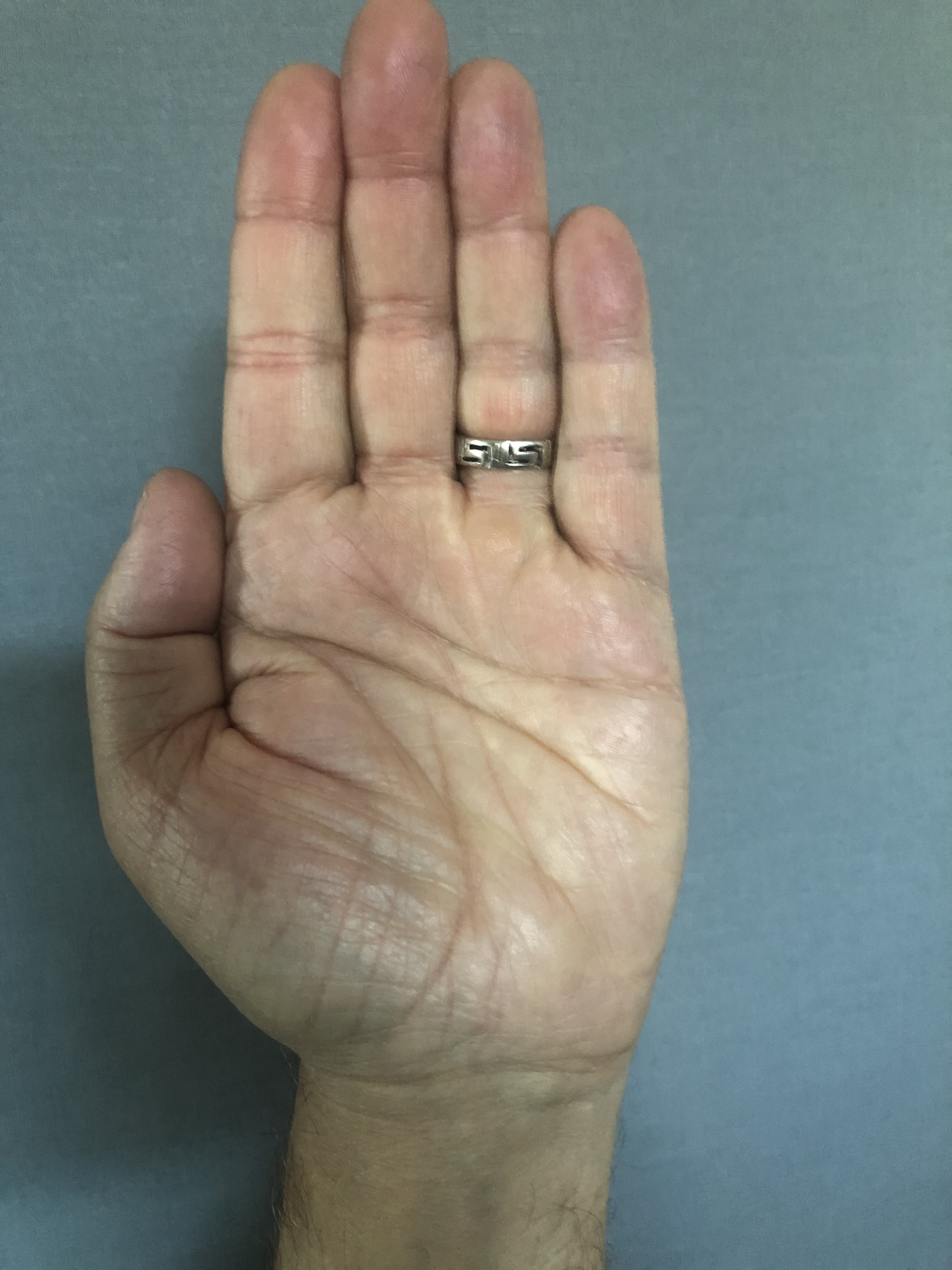
The Nakshatra Hasta is named with the Sanskrit word for hand. The constellation of five stars represents a raised hand, palm forward, a sign of universal blessings. This auspicious Nakshatra draws on Divine wisdom, inspiring the high-minded will to act.
It is an invitation to do our work and reminds us that our work is to strive to become servants of humanity. This is not slavery, but rather a willingness to put the interests of others ahead of ourselves in all situations. It is the Buddha’s 8-fold path and the Christian’s Golden Rule applied to every aspect of life.
And although this is work with a purpose—service to others in order to raise consciousness and bring about the betterment of all life—it is not for us to claim the fruits of this harvest, nor is it for us to quit simply because we don’t directly receive the fruits of our labor.
If we do our work with a generous heart and set aside the longings of our ego for recognition and reward, then we are benefiting all life. The collective efforts we and others make for the betterment of all—including those who mistreat us—benefits us far more and for far longer than any claim of reward on the moment.
Work done in this manner brings about a decrease in selfishness, evokes forgiveness, and clears the negative karmas of the past.
The Hand’s element is Agni, the original fire that sustains life and motion. In the fixed earth sign of Virgo, where Hasta resides, Agni preserves the earth and work done today that benefits the ecological health (tending to plants, recycling, reducing use of packaged products, cycling or walking rather than driving, and other “green” activities) are especially helpful for all.
The ego is the main obstacle to human progress, and there is no place it is more of a threat than in our work. Our language, focused so much on “I” instead of “we” encourages this trap to spring, locking us into the desire for personal recognition and reward. What is needed is to release all such concerns and just do our work.
If we are asked who we are or what we do, the true answer is we are connected to all life in service to itself as a Divine plan and process regardless of our title.
The God of any religion isn’t some separate, external energy, person, presence, or icon. It is the Agni that burns as energy—eternal and indestructible—within each of us. If you believe in yourself then you believe in the energy that created you. Call it by any name you like, you are describing the Atman, the Divine within.








 American Vedic Astrology
